
Books Recomended :

marketing and business
Google Hacks:Everyone knows that Google lets you search billions of web pages. But few people realize that Google also gives you hundreds of cool ways to organize and play with information.
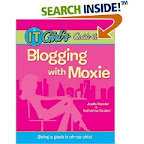
The IT Girl's Guide to BloggingHow to choose the right blogging platform or content management tool, select a web host, dress up your blog, manage blog content and keep your privates private! When you are ready for more

Sunday, July 27, 2008

Blog Design Solutions

blog designBlogging has moved rapidly from being a craze to become a core feature of the Internet from individuals sharing their thoughts with the world via online diaries, through fans talking about their favorite sports teams or music, right up to serious business minds discussing industry futures. And that includes you, right? If you haven't got a blog already, you want to start one, and want to find out how. If you have already got one, you want to know how to customize it, and make it look cooler than everybody elses. In either case, this is the ideal book for you. In this book, a team of renowned web designers take you through the ins and outs of putting together great blogs. They waste no time harking on about the philosophy of blogs, or the community behind them. Instead, they get straight to the practical details, showing how to set up a basic blog in some of the world's most popular blogging engines &emdash; Movable Type, ExpressionEngine, WordPress, and Textpattern. With your blog set up, they then show you how to build great looking, usable layouts for your blog. The last chapter even shows you how to build your very own PHP/MySQL-based blog engine! With this book in hand, youll have found your way to blog heaven in no time! Summary of contents:

* Chapter 1: The "Web Log"
* Chapter 2: Creating a Local Test Environment for Your Blog
* Chapter 3: Movable Type
* Chapter 4: ExpressionEngine
* Chapter 5: WordPress
* Chapter 6: Textpattern
* Chapter 7: Write Your Own Blog Engine

This book will be extremely helpful to the new blogger who desires insight into the ins and outs of blogging, as well as the logistical knowledge (geeky know-how) required to install and use four of the most popular blogging systems available today (MovableType, ExpressionEngine, WordPress, and Textpattern). Its depth regarding the specifics of each blogging system is shallow, but given the obvious diversity of the content and targeted audience, this should be expected. To that point, most of the authors explicitly acknowledge only being able to give a small glimpse into the depths of each blogging system.

The four chapters, dedicated each to a specific blogging system, are an excellent starting point for the blogging newbie. However, this comes at a price. That is, in order to digest the four chapters which focus on a specific system, an individual must first digest the technical matters discussed in chapter 2 (LAMP, WAMP, MAMP). I don't see this as a downfall of the book, but rather as the place where the learning curve might jump beyond the targeted audience.

Once the reader has digested chapter 2, the book moves straight into the implementation and usage of MovableType. At this point, I think the authors made a critical error by not including a chapter dedicated to an objective overview and comprehensive comparison of the four blogging systems showcased. For example, ExpressionEngine has very specific strengths in the realm of user management that should have been compared and contrasted against the other systems. The reason being, that a majority of the noise found on the Internet concerning blogging is dedicated to this exact issue. As well, it never fails. Each and every person blogging today did (or eventually will) seek an objective overview and comprehensive comparison of the blogging systems available. Without a comparison of the strengths and weaknesses of each system, readers are left to essentially pick one of the systems randomly, hoping they are picking the one that best suits their needs. Questions like, "which system provides the easiest template manipulation?", "which systems support community plug-ins?", and "which system is the easiest to get up-and-running?" are left for readers to either deduct from one small chapter or research and answer elsewhere.

As for the last chapter, I was a little confused by its worth to a blogging newbie (at whom the book is obviously targeted). I'm almost sure that if you need a book to show you how to install Textpattern, then the last chapter of this book is way over your head from a technical perspective.

The book's saving grace is the fact that it was published at all. Given the options (none at this point), this book is well worth the purchase if your goal is to get up and running with next to no knowledge about the topic at hand. Of course, I hear that Typo 3 has a book.

Stumble Upon Toolbar
Read More...

Publishing a Blog with Blogger: Visual QuickProject Guide

publishing a blogIf you want to start blogging fast, but don’t want to get sidetracked by the details, then you need a Visual QuickProject Guide!

Writing in a journal is all well and good, but when you're ready to share your musings with the world (and you think the world is ready to receive them!), a blog is the way to go. For just $12.99, this compact guide shows you how! Using big, bold full-color pictures and streamlined instructions, it covers just the need-to-know essentials that will get you blogging with leading free blog software--Google’s Blogger--in a matter of minutes. Best-selling author Elizabeth Castro takes you through each step of the blogging process--from acquainting you with the interface to setting up your blog, creating your profile, posting email, adding pictures and audio, and more. Occasional sidebars and tips point out other useful blogging tips and tricks.

This book is very visual, lots of fun, and easy to read and understand---in short, perfect for the beginning blogger. It is the exact opposite of a reference manual, and thus is very hands on. Note that this book is only for people who want to use Blogger, which is free, to publish their blog. If you don't know what you want to publish your blog with, you like the "free" part, and you're not a business, you probably will be very, very happy with Blogger. So this would definitely be the book for you.

It is only 127 pages, so it's not overwhelming to read. You can easily go through it over a weekend and get your blog up and running. If you have HTML or XHTML experience, you'll find lots of good things, too, so slightly more experienced bloggers may still pick up a few tips, like how to change their header on a template or how to syndicate their blog.

If you are a geek, you won't need this book. You'll just log onto Blogger and think it's "intuitive" and be able to do everything. However, if you're like me and get stuck a lot, even with so-called "intuitive" software, you'll love this book.

Even though this book was published in 2005, and yes, Blogger is in a new version, I haven't found any problems applying what is in the book. None at all. The new version of Blogger just does more things for you; everything in the book still needs to be done one way or another. So it's doesn't make the book dated as far as it's utility goes. If you're really a beginner (which is who this book is for) you might not even notice.

There are pictures throughout of what the screens look like, so instead of TELLING you what to do and letting you figure it out, the book SHOWS you what to do and you just follow along. It keeps things as simple as possible.

Highly recommended for beginning bloggers.

I really thought this book was great, showing and giving more information than Discovering Computers. I recommend the book Publishing a Blog with Blogger for those who want to make a blog fast.

Chapters:
  • Introduction- talks about what a blog is and how it works, what tools you need, and offers additional help, along with how to use the book.
  • 1. Starting your blog- tells you where you have to go, set your account, name your blog, choose a template, viewing your dashboard, and signing in and out.
  • 2. Writing your blog- tells you how to get down to the writing. How to add ,edit, and your posts, linking blogs, saving and publishing your draft, and formatting and your pictures.
  • 3. Bloggoing from afar- tells you how to blog an email, blog from your toolbar, set up and label audio blogger , and also blog on your cell phone.
  • 4. Personalizing your blog- tells how to add the description, more about templates and picking one, adding links, removing and renaming sections, adding your previous posts, changing headers and adding footers, unifying your color scheme, saving ,republishing, and backing up the templates , and changing the dates and time zone display.
  • 5. Telling others about yourself- tells how to view and edit your profile, add photos to your profile, adding general info., blurbs, and searchable bits, searching others profiles and how to format your "about me".
  • 6. Getting others to contribute- How to leave, view, allow, delete, stop, hide, and bar comments, adding and removing members, formatting members posts, and joining a blog.
  • 7. Hosting your blog yourself- Tells you how to get a web host, web domain, switching to your FTP, FTP settings, testing, posting, and adding photos to your FTP'd blog, and removing you navbar.
  • 8. Getting the word out- Shows how to List your blog, announce new posts, syndicate your blog, offer link to site feed, and how to index you blog.
Summary:
In Publishing a Blog with Blogger, the author helps you start a blog fast. Without any of detail that might side track you. Shows you how to set things up step by step.

It seems to be very easy to follow with colorful pictures and brief description on the steps you take. Anyone can start easily with this book.

Stumble Upon Toolbar
Read More...

Sunday, June 22, 2008

Where to Get Cheap Web Hosting

First, to see if you can use cheap web hosting you need to know how much disk space you will need. How large is your website? How many pages, video files, music files, etc. do you need?

Second, a cheap web hosting company will need to know how busy your sight will be. If your site is going to have a lot of visitors, cheap web hosting may not be for you.

Third, how many email accounts do you need? Cheap web hosting companies do not usually provide many. Lastly, how much are you willing to spend? Cheap web hosting is not as technical as the more expensive web hosting.


If you go online, you can find a list of the top 10 cheap web hosting companies. The top 10 cheap web hosting companies are rated by their price, quality, and service provided.

The cheap web hosting companies are priced between $4.95 and $19.95 a month.

The cheap web hosting company's price varies on what kind of things you need. The disk space provided can be from 3000MB to 5000MB. The bandwidth varies from 40GB to 300GB. If this is not enough for you, then a cheap web hosting company is not an option for you. Most of these cheap web hosting companies offer free set up.

This will make things much easier for you. Be aware of cheap web hosting that offers unlimited disk space. If it sounds too good to be true, then it probably is.

The top 10 web hosting companies reviewed are: Blue Host, Power Hosting, Pages Garden, Pro Logic Hosting, Easy CGI, Gigabyte Package, Yahoo! Hosting, iPower Web, Lunar pages, and Dot5 Web Hosting. All of these are very cheap web hosting companies. You will find them listed at top10webhosting.com.

At this website you will also find customer testimonials and thorough listings about the cheap web hosting company's services they offer to you.

For those of you who still think that this is not cheap web hosting, you can also find free web hosting. It still comes with a price, however. Comcast offers free web hosting to anyone who subscribes to their internet service. You still have to pay for the internet service, but the web hosting is free. That's the best that can be done about cheap web hosting. Weigh the odds, and see which route is best for you.

Stumble Upon Toolbar
Read More...

Criteria of Choosing an Ideal Web Hosting Company

Before we talk about what it takes to be a cheap and good quality web host, let's get to the fundamental first.

What is a Web Host?

A web host is a service provider that places your web site on a computer which is connected to the internet. The term for this 'computer' is called a server.


A web hosting provider will typically have a fast connection to the Internet and they may host thousands of web sites on many servers. The web host essentially rents out space to you so that you can get your website up on the world wide web.

With a well-managed web host, you can free yourself from worrying the up-keep of complicated server technology and proper technical maintenance. That's the whole purpose of the web hosting companies. You should leave the technical work to web hosting professional while you focus on your own internet business.

Feature Offered

The features that web hosting companies are offering are getting quite standard nowadays.

The followings are some of the common features you'll see in most web hosting plans:

* Control Panel
Control Panel is an interface where you can access your site on the web server, allowing you to set-up and subsequently update and customize your web site. Though cPanel is by far the most popular control panel, some hosting providers customize their own so that they can up-grade and expand it at will.

* Diskspace
A vast majority of sites that don't have tons of graphics, sound and video clips or downloadable files easily fit in 50 MB of disk space. You should always leave yourself some room for growth or check if the host has a bigger plan in case you need to upgrade.

* Bandwidth
Bandwidth is the amount of data transmitted or received through a unit of time. In web hosting, bandwidth is consumed when visitors make requests for files on your web site and download them to their personal computers.

* Email Account
With POP3 email accounts you can check email from Outlook, Netscape Mail, Eudora or any other Email software.

* Scripting language
As all our top 10 listings are using Unix and Linux platform, php, perl and CGI are the languages we are talking about here. It is best to choose a host that supports the latest version to maximize the latest web technologies for the fee that you pay.

* Database
If your web site is going to store a lot of data that should be dynamically accessible (like user accounts, stock prices, maps, Interactive news, message boards and forum etc.), you'll need to look for an account that offers a database. MySQL is a powerful and most popular database program that runs on the Linux operation system. It is able to handle million of entries all at once. Its flexibility and speed allow you to also store logs and pictures. MySQL is designed to scale well under heavy traffic conditions and is ideal for database-intensive or e-commerce-enabled Web sites.

Price to Disk Space / Price to Bandwidth Ratio

Are you paying too much for your Web Hosting Plan?
Having done the research on hundreds of web hosting companies, in general, we've come to this conclusion: the more disk space and bandwidth you are getting, the more expensive is the monthly price.

To help you understand which price is competitive enough for you to take up the offer, we have categorized 5 different price range. For each price range, a score of maximum of 10 is assigned. To understand the concept behind this, please refer to the details here.

Popularity
A web host might have the best feature offered, unbeatable customer support and reliability in place but without an effective marketing plan, it will go bust too. Let's face it. If a web hosting provider does not have sufficient members and steady growth of new members, it's very difficult to survive in this highly competitive industry.

We judge the popularity of a particular web hosting provider by looking at the number of awards won, the reviews of other websites and the Alexa traffic ranking.

Reliability, Speed and Uptime Guarantee
Nothing can hurt you more than this: your visitors come to your web site only to find that it's not accessible. You lose credibility and possibly even a sale. If your web host does not guarantee at least a 99% uptime, leave the web host now!

To ensure maximum uptime, installation of redundant back-up systems is essential. Each web host has their own management systems to minimize downtime. "Redundant" means that if any of the Internet connections get interrupted, the alternate Internet connection will take over.

We use Alertra software to monitor the uptime of each of our top 10 web hosts.

As for speed, even though routing, web server set up and local area networks play a part in determining the speed of a site, the main concern of how fast your site is depends very much on the types of network connections.

Many hosting providers still connect to the Internet through T1, or T3 connections. This is not the case for our top 10 hosts- they are using OC (Optical Carrier) lines.

A T1 line will offer data transfer rate of 1.5 Mbps (megabits per second), while a T3 line can supply data transfer rates of 43Mbps. OC-1 refers to a circuit that transmits 51.85Mbps. Higher levels are multiples of that speed. Ultra-High Speed OC3 and OC12 lines offers 155Mbps and 622Mbps respectively. Some hosting providers have connections to major internet backbones at the speed of OC48 (2488Mbps) and OC96 (4976Mbps).

Stumble Upon Toolbar
Read More...

CGI Web Hosting - Useful Scripts for your Busines

If there's one thing that people love it is a web site that has plenty of automated features. Sites that are highly interactive tend to get the most traffic and generate the most business for the companies that run them.

Automated features can also play a "behind the scenes" role, making your site easier to use, run smoothly and allow for things like online sales and password protection.

There are many ways to get this type of automation into your site, but all involve either client side or server side scripting.

Scripts are written in programming languages specially designed for the web, and there are several languages that are commonly used. Most client side scripts are written in Java which is still one of the best web programming languages around.


Some functions of a web site must be completed via server side scripting, however, and the most commonly used languages for server side scripting are PHP, PERL, and CGI. PHP and PERL are newer languages and are gaining a lot of popularity, but there are still plenty of features that can be scripted in the granddaddy of web scripting languages, CGI.

Shopping Carts

No online sales site would be complete without a functioning shopping cart and most of the best ones have been written in CGI script.

CGI web hosting is great for shopping cart scripts because it interfaces well with most databases, including the popular MYSQL and MS Access databases, it can be utilized on Windows, UNIX, LINUX, and MACOS servers with equal ease, and can be easily configured for sales tax and shipping cost calculations.

Some newer shopping cart scripts are being written in PHP and PERL, but most of the functioning carts on the web are in good old CGI web hosting scripts.

Password Protection

Many web sites require some sort of registration and entry of a password for the user to access the site's features. This is done for a number of reasons from simply a desire to track visitors for marketing purposes to allowing postings on message boards and ensuring that users have paid any required fees associated with use of the site.

The automated registration process and user name/password issuance can be written with CGI scripts and many of them have been.

Form Managers

Have you ever wondered how the forms you fill out online are handled? In most cases, they're handled by CGI web hosting.

When a user fills in that form and hits the "submit" button, a CGI script takes over and sends the data in email or writes it to a database where it can be accessed later by the site's administrators.

Stumble Upon Toolbar
Read More...

Introduction Of Web Hosting

When you first start out trying to get a site on the Internet everything seems so confusing. Obtuse acronyms flow freely through the 'Beginner Friendly' information sites and definitions can be hard to come across.

The main reason for this is that the Internet and the process of getting a website online is really very simple, and once people get past the first stumbling steps they rarely remember the difficulty they once had, which leads to them being unable to understand the next wave of dot com newbies.

So let's begin with defining some of the basic terms that are commonly thrown around when looking for a web host. You'll quickly realize that computer geeks like using big words for simple concepts. What do you expect from a group of people that decided to call half a Byte a Nibble?


Web Host: These are the people that supply your website with somewhere to sit and be accessed from. They're often a wealth of information, so when you're trying to find your feet it will often be worthwhile to contact their tech support and get your questions answered. Because of this, it's important to contact them BEFORE you sign up for any packages to ensure that you'll receive a timely response. Just fire an email their way and see what happens.

Disk Space: This is the same as the space on your own PC's hard drive. Web Hosts will allocate a certain amount of space to your website, usually in Megabytes (MB) or gigabytes (GB). This determines how much you can store on your site.

Bandwidth: Bandwidth is the amount of data that can be retrieved from your site within the bandwidth period. The bandwidth period is the length of time before your bandwidth gets reset once again, usually about a month. Bandwidth is measured in MB and GB, like disk space. Always find out the consequences of exceeding your allocated bandwidth before you purchase a hosting package.

Domain Name: The domain name is your personal identifier on the Internet. This is what gets typed into a web browser's address bar to reach your site. Some hosting companies will offer a domain for free, while others will have the facilities to provide one for a minimal cost.

SQL (MySQL, SQL Server etc.): Structured Query Language. This is the language used to interact with databases. Chances are that if you don't know about it when you start looking for web hosting, you're not going to need to know about it for at least a little while longer.

HTTP: Hyper Text Transfer Protocol. Basically, how the Internet works. It is the protocol governing the transfer of web pages from one place to another.

HTML: Hyper Text Markup Language. This is (usually) what you'll be using to make your website, whether directly or indirectly. Don't be scared by the name, the 'language' is very easy to learn.

FTP: File Transfer Protocol. This is a method for sending pages and files from your home PC to a server. It is quite simple to use and your host will provide login information if this is the method that they use for file access. Typing "FTP://[server details]" into My Computer on a windows box allows you to use FTP as if your server were a regular windows folder.

POP3: This is a common email 'post box' system. It is use to store emails for retrieval.

SMTP: Simple Mail Transfer Protocol. A common protocol used to send emails.

The beginner will not really need to know too much about the above two email technologies. If they're listed, good. It means you have email accounts with your website (i.e. the email name@yourdomain.com will reach you, somehow)

There are many 'languages' used to enhance websites, such as Java, Perl, ASP, .NET, PHP, etc. If you're just starting out you should try to learn simple HTML first before you worry too much about these more advanced languages. In general they're not too difficult to learn, but you'll want a solid grounding before you tackle them.

The Internet is a wonderful source of knowledge, so whenever you want information just fire up your favourite search engine and type in your problem. The Internet is full of sites about the Internet, so the information you want shouldn't be too hard to find.

Stumble Upon Toolbar
Read More...

Right Choosing Domain Names for Your Business

Let's say that you're creating a website for Tutuk's Specialty Computer Products. Should the domain name be tutuksspecialtycomputerproducts.com?

Perhaps -- but don't stop there. Having the right domain name, or domain names, can bring more traffic to your site.

Why more than one domain name?


One domain is all you need to set up a website. But with more domains directing to your site, you can have these additional benefits:
  • Bring site visitors who type variations of your domain name
  • Acquire traffic that might otherwise go to your competition
  • Harness the marketing power of keyword domains
Your primary domain name

If it's feasible, use your business or brand name in your primary domain. People will remember it and associate it with your business. Also consider the following factors when choosing your primary domain.

Domain name extensions

Should your primary domain end with .com, .net, or .biz, or with a country-specific extension such as .io or .co.jp?

If your website is aimed at people in a specific country, having a country-specific domain can help:
  • Site visitors will recognize right away that the business has a presence in the country of the extension. They may therefore be more comfortable buying from you.
  • Some country-specific search results include sites with the relevant country-specific domain extension even if the site isn't hosted in that country.
If you want to attract both people within your country and those in other countries, have both. Each domain could direct to the same site, with each audience seeing the domain intended for them. For country-specific search results, the primary domain should be the country-specific one.

Domain name length

A short domain is easier to remember, it has less risk of being mistyped, and it'll fit easily on your business cards and correspondence.

Conversely, if a short name doesn't represent your business, it's more difficult for people to remember. The short names you like may already be taken anyway.

If your business name is up to three easy-to-spell words, it'll probably work as a domain name. For a longer business name, the initials or just one or two words may be easier than remembering a combination of words.

Secondary domain names

Secondary domains directing to your site are for online use:
  • For people who type your primary domain name incorrectly
  • For people who search for your products or services online
Typing and spelling variations

How many ways can people spell and type your business name?
  1. tutukssspecialtycomputerproducts.com
  2. tutuks-specialty-computer-products.com
  3. tutukspecialtycomputerproducts.com
  4. tutukspecialtyproducts.com
For secondary domains, hyphens make long domains easier to read. Each word stands out when people see your domain. However, domains such as buy-keyword-product-now.com make some people view hyphenated domains, especially those with more than one hyphen, as spam-like.

Having the words in domains separated may help some search engines recognize keywords. With Google, though, hyphens don't make any difference.

Consider all of these variations for secondary domain names:
  • With and without hyphens
  • Different ways of spelling some words
  • Singular and plural versions of nouns
  • Extensions with .com and .net as well as a country-specific extension if relevant
What people search for

While having keyword domain names may not draw a lot of site visitors, using them is a technique to consider.

How to use more than one domain

Set up your website with your primary domain, and use that domain on your correspondence and with your customers.

Point secondary domains to your site using URL forwarding (also called domain forwarding, domain redirect, or URL redirect). To have the secondary domain appear in the browser, use domain masking. You can set up these features when you log in to your account with your domain registrar (if your registrar offers these services).

The next step

Once you decide on the available domains that you want, register them immediately. They might not be available tomorrow.

If you don't already have a business name, you'll find it easier to market your business online if you choose a primary domain and a business name together. If your first choice for a business name doesn't work well with any available domains, consider a business name that you can easily market with an available domain. Once you've registered that domain name and your business name, register secondary domains and put them to use.

Stumble Upon Toolbar
Read More...

Dot com or dot net, which is the best domain name for?

When seeking domain names most people get confused over whether to settle for a dot com address or a dot net one. More so in recent times when dot net addresses have risen in popularity and usage on the net.

There are a few important facts that one needs to realize before they opt for a dot net address. Quite often when people need to commit the address of a website to memory, they will not remember the dot net and the first place they will check is the given address with a dot com ending.

Many times when they do not find it there, they will hardly ever think of using dot net to repeat the search. That is a lost visitor and maybe even potential client.


What is even more worrying is that there is increasing evidence to suggest that an increasing number of people end up at a website after hearing about it either from a friend or acquaintance, or by seeing an advertisement on Television or hearing about it on radio or reading something about the site.

When committing the website address to memory very few will distinctly remember the dot net address if that is the domain name that you have chosen.

Having said that, let us also appreciate the fact it is becoming increasingly difficult for anybody to land a decent dot com address. After years of use, there is hardly any short catchy name that you can think of that will not have been already taken up.

Do not even mention search-engine key word friendly domain names which will be virtually impossible to get.

This is the reason why folks often settle for a dot net address. Others do not even bother to start their search with dot com domains. This is a big mistake despite the unavailability of good dot com domains, which we have already acknowledged.

Exhaustive efforts should be made to try and secure a dot com domain before you give up and move to dot net. For example you can try and search for abandoned domain names. In fact by making an effort to be really creative and not hurrying the process, it is quite possible to secure a reasonably good dot com domain.

You can be sure that it will be well worth the extra effort and time you put into it which will result in better success when you begin to seek traffic. Of course if you just cannot get a dot com domain, a dot net one is a good second choice.

Stumble Upon Toolbar
Read More...

Useful Tips When Applying Web Hosting

Once you have considered the design for your website and it is ready to be hosted, there are some matters to be considered when choosing the adequate web host:

1 - Accessibility of the site?

Once you have applied for a web host provider you should take several aspects into account such as the time it takes to load or the period of time it is up.These aspects are very important because if there are problems related to them, this can create extreme annoyance and renouncement of the possible visitors.

The best method to acknowledge if a server is usually up would be to take a look over the reviews written by other persons who have applied for the server before you.


2 - Does the provider offer SSL??

In the case of a hobby websiter or, in other words, if you will not be making any transactions on that particular website, the SSL protection is not necessary.In the other case, if transactions should be made in the near future it is necessary for you to choose the webhost which includes the SSL protection upfront.

SSL is generally used for encrypting any piece of information such as:credit card codes, names, etc.

Deciding to subscribe to a webhost which does not comprise of SSL protection and choosing afterwards to have it installed, could turn up to be more expensive than having applied for a webhost which provides SSL in the first place.

3 - Is server side scripting available from the server?

Despite of the fact that these server side scripting is provided by almost all servers, it is still advisable to check out if they do.Pages changing in real time are given the chance to be created by the webmasters due to the server side scripting.

For instance, in the case of running a business and having all products arranged in a database, the server side scripting will give off the pages by means of the ranges the customers choose to see.

You should not think of using a server which does not provide functionality for a server side scripting. www.powweb.com and www.ipowerweb.com can also be shown as examples for sites which comprise of servers side scripting.

4 - Customer Support

The support given to customers is of an utmost importance when choosing a web hoser.Even in the case of an experienced webmaster, I am sure that there are still some questions to be asked when signing up with a website.Some of them have created special forums for frequently asked questions(FAQ-S).Actually the only one of this type I found up to now is www.powweb.com.

Even tough these aspects are widely known, the attention should be drawn anyway, for there are many persons who pay significant sums after having signed to a web hoster on the basis of having ignored these conditions.Taken this into account, the collaboration should be nothing but successfully.

Stumble Upon Toolbar
Read More...

Web Hosting The Basic For Beginner

If you have decided you or your company is in need of a website, you will have to purchase web hosting services from a hosting company. There are many different web-hosting companies to choose from, and they can easily be found on the internet.

If you do a quick search for them in any search engine, you will find that there are almost too many to count. Choosing the company that is right for you can be a harrowing experience, but there are really only a few basic things to consider.

The first factor to consider when choosing a web hosting company is how much space they will give you for your account.


If you merely want a single page on the Internet with little or no graphics, you can get by with purchasing an account with the smallest amount of space available.

However, if you are planning to create a full e-commerce site with multiple pages and order forms, you will need to make sure you have enough server space to support your entire operation.

Before you sign your web-hosting contract, you will first have to choose and purchase a domain name. Though many of the names you might want are already taken, you can often find one that suits your needs, especially if you get creative with it.

For instance, if your business is called Cards For You and that domain name is already taken, you might consider choosing More Cards For You or Cards For You Today. The possibilities are endless, and with a little thought you will be able to think of a snappy domain name.

Once you have a domain name, you will of course have to create a website to put on the Internet. There are many do-it-yourself web design programs that are fairly user friendly.

Software like FrontPage makes web design a cut and paste, fill in the blank soft of affair.

However, if you would like a more professional look, you can use programs like Dreamweaver or Image Ready to make your sites. There are always freelance web designers looking for work who are ready to take on your cause if you are not savvy enough to do it yourself.

Web hosting companies give passwords to allow you access your space on their servers. You can upload files and pages using their own interface programs, or you can utilize the upload tools built in to your web design program.

Once you upload a page, it is important to make sure it looks correct on a variety of different web browsers.

However, once you work out the kinks and create an excellent site, all you have to do is pay your web hosting bills, and your site will be available for the whole world to see.

Web hosting companies usually offer options regarding payment plans. You can pay for a year at a time, or you can monthly or quarterly to maintain your place on the World Wide Web.

Stumble Upon Toolbar
Read More...

How To Choose A Good Web Host..??

Choosing a web host is never easy. There are just so many unknowns when it comes to finding a host. It's hardly ever possible to walk into a web host's office, look around, meet the owners, and get a feel for whether or not you'd like to do business with these people.

It's important, though, that you bend over backwards to establish whether your prospective web host is a credible provider - or a fly by night artist.


The webmaster industry is awash with horror stories about signing up with a web hosting company, onlty to find out later that this 'business' is run by a 14 year old who lives at home.

For the most part, you'll make your decision using whatever information you can find online.

Start out with the website of the web host you are considering.

Is it professionally designed and written? Typo's and spelling errors may signal that this is a company ran by kids or amateurs.

Is the website easy to use? Is it designed with a view towards helping people? Are help materials available online? This should give you a flavor for whether the company is client oriented.

Where is the company located? Is there an address? Can you email them?

Look at the Terms of Service. Does your prospective web host clearly spell out what may be expected of them and what is expected of you? Every deal is different, but both parties should clearly know what the deal is.

Next, do a search for the company on Google. Are you finding any negative statements? Try different searching techniques, like typing the company name followed by the word "scam", or by the words "poor support".

Now, try emailing their customer support department. Do you get a fast reply? What about their sales department? Do they answer enquiries quickly? Let's face it...if they won't pay any attention to you when they're trying to get your business, how much more will you be neglected after you sign up?

If you follow these simple suggestions, your chances of signing up with an excellent web host increase substantially.

Stumble Upon Toolbar
Read More...
Your Ad Here

Search Engine Optimization - AddMe